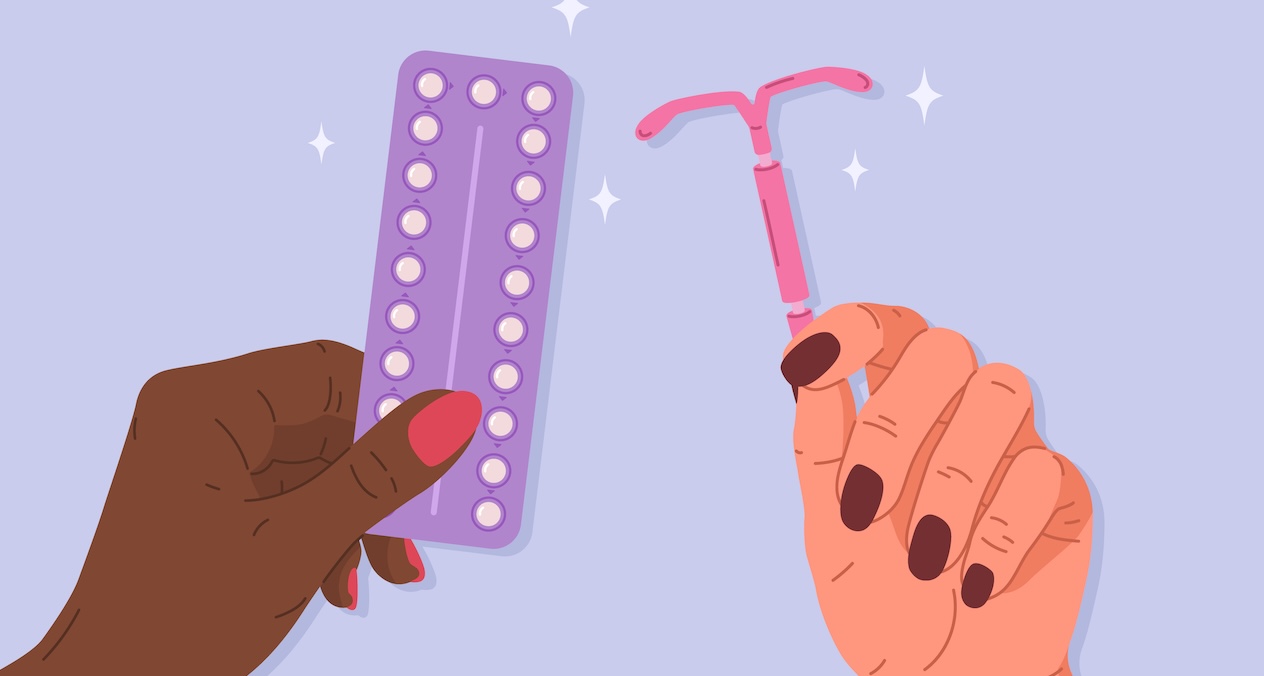


An LNG 52mg IUD is a common method offered for endometriosis-related heavy bleeding and cramping, but it doesn’t reliably suppress ovulation, which matters when a patient has extra-pelvic disease. This clinical scenario opens with a rare complication and walks through when co-prescribing contraception for endometriosis is appropriate, which systemic methods add ovulation suppression, and how to counsel patients using two hormonal methods at once. It also covers other common co-prescribing situations, from acne to menstrual migraine to bothersome breakthrough bleeding.
The scenario:
25 y.o G0 patient (she/her) comes into the clinic for an emergency department (ED) follow up. She has a history of endometriosis and has been using a LNG 52mg IUD for contraception and management of heavy menstrual bleeding. She has no other medical conditions and does not take other medications. She went to the ED for new onset shortness of breath and was diagnosed with a spontaneous pneumothorax (collapsed lung), which was ultimately discovered to be a catamenial pneumothorax.
What is a catamenial pneumothorax?
A catamenial pneumothorax is a rare, spontaneous pneumothorax that occurs around menstruation, usually within 3 days before or after bleeding starts. It is linked to endometriosis, as it involves the growth of endometrial tissue into the the diaphragm or thoracic cavity.
In this scenario, why might her IUD be insufficient to adequately address the manifestations of her endometriosis?
While the LNG 52 mg IUD provides strong local endometrial suppression and helps with menorrhagia, it does not consistently suppress ovulation and so is less helpful for individuals with clinically significant extra-pelvic endometriosis. Because catamenial pneumothorax is tied to the cyclical hormonal changes associated with ovulation, continuing to ovulate may leave her vulnerable to recurrent pneumothoraces.
What other contraceptive options might you consider to help with ovulation suppression?
Combined hormonal contraceptives, like the pill and the ring, can be used continuously to provide consistent ovulation suppression. Medroxyprogesterone acetate (DMPA) can also be considered, as it reliably suppresses ovulation.
Is it safe to co-prescribe two contraceptive methods together? And can she keep using her IUD for pregnancy prevention if she wants to?
Yes. Co-prescribing is safe and common in endometriosis management. In this scenario, an IUD can be paired with systemic hormones (pill, ring, DMPA) for improved ovulation suppression and ongoing contraception. Before prescribing a combined hormonal contraceptive (CHC), ensure the patient does not have any contraindications to estrogen-containing methods.
Other common scenarios when co-prescribing may be helpful:
- Using CHCs for acne and an IUD for prevency prevention
- Using continuous CHCs for menstrual migraines and an IUD for pregnancy prevention
- Using CHCs to help with bothersome bleeding with progestin-only methods like hormonal IUDs and hormonal implants
And for this patient, while co-prescribing is an important component of her endometriosis management, she may also need surgical intervention in the future.
Key Points
- Catamenial pneumothorax is a rare manifestation of endometriosis linked to ovulation and menstrual bleeding.
- LNG IUDs help with dysmenorrhea and localized endometrial growth but may not fully suppress ovulation, limiting their effectiveness for extra-pelvic endometriosis.
- Adding systemic hormonal methods (pills, ring, DMPA) can help better suppress ovulation.
- Dual-method contraception prescribing is safe and often clinically useful for managing endometriosis and other conditions.