Three mis/disinformation trends going viral now
Trends updated weekly by Bedsider Providers editors
1.
Video claims birth control affects attraction
This video asserts that hormonal birth control “manipulates” women’s hormones to make them more attracted to feminine-looking partners, presenting a contested and nuanced area of research as settled fact. While some studies have examined the relationship between hormonal contraception and partner preference, findings are mixed and methodologically debated, and larger, more recent research has not found meaningful differences in attraction patterns between pill users and non-users. Flattening an unsettled body of evidence into a definitive warning overstates what is known and feeds into a broader pattern of anti-contraception content that uses the language of science without its rigor.
Go to the physical attraction and birth control guide
@datasetwave This is Why Birth Control Pill is Horrible #hamzaahmed
♬ suara asli – Captain_Hanzz – Capt_Hanzz
2.
Content creator claims birth control is ineffective for PCOS
This video flatly states that birth control “is not the solution” for PCOS and irregular periods, a claim that runs counter to established clinical guidance. Combined oral contraceptives are a recognized first-line treatment for managing PCOS symptoms, including irregular cycles, hirsutism, and acne, and play an important role in reducing the risk of endometrial hyperplasia from unopposed estrogen. For patients not seeking pregnancy, hormonal contraception is both appropriate and effective. Content that discourages this option without offering evidence-based alternatives can leave patients without tools that have a strong track record for symptom management.
Guide coming soon!
@pcos.weight.loss Who said that!😆… Birth control is not the solution when you have PCOS and irregular periods! It gives you a fake period by taking over your hormones and cycle. Once you decide to get off birth control, symptoms like weight gain, irregular periods, and anovulatory cycles could get worse! Target the root cause immediately, instead. #pcos #pcosweightloss #pcosawareness #pcosproblems #pcoslife
♬ original sound – PCOS Weight Loss
3.
Misleading abortion trauma narrative
Pairing a personal account of emotional distress with hashtags like #abortion and #trauma, this video implies that psychological suffering is a predictable outcome of abortion. The emotional experiences shared are real and worth taking seriously, but using them to suggest that trauma is the typical response misrepresents the evidence. High-quality research does not link abortion to increased rates of depression, anxiety, or PTSD, and emotional responses after abortion are highly variable. By presenting one person’s experience as broadly representative, the video reinforces abortion stigma and can shape patient expectations in ways that diverge significantly from what the population-level data shows.
go to the mental health and abortion guide
Other social media mis/disinformation guides

Abortion safety
learn more
Cancer and birth control
learn more
Mood changes and birth control
learn more
Vaginal hygiene
learn more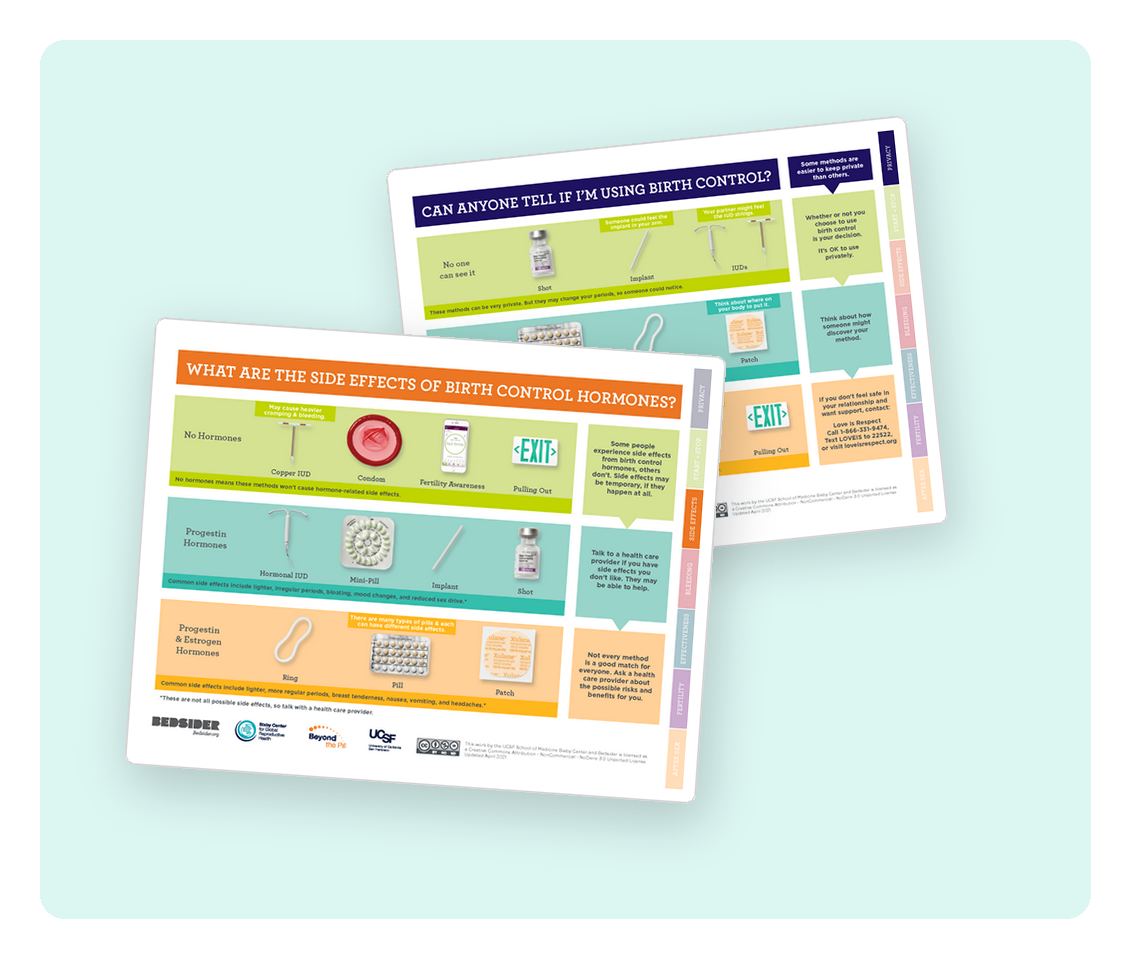
Patient Education Materials
Bedsider’s patient-centered posters, tear sheets, and other visual aids