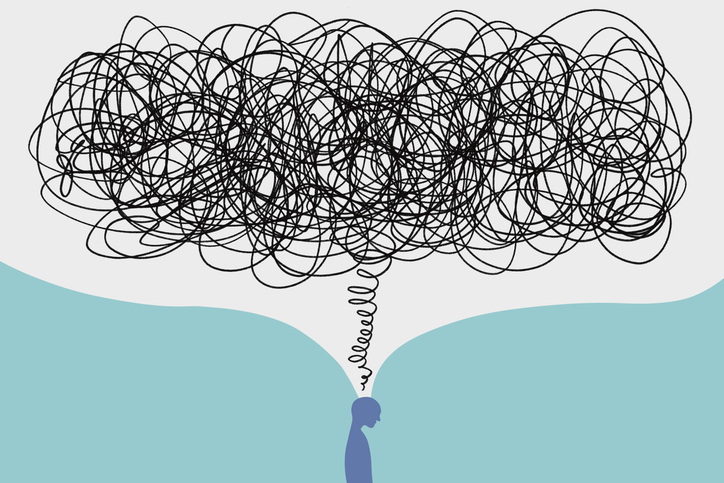
What are patients seeing on social media about mood changes and birth control?
Patients are exposed to widespread claims online that hormonal birth control universally causes depression, anxiety, or severe mood swings. These narratives often oversimplify and exaggerate the evidence.
What’s the evidence around birth control and mood changes?
- Concerns about mood swings, depression, and anxiety with hormonal contraception have been around for decades. While the delivery platform (social media) is new, the question isn’t—and fortunately we have years of research to guide us.
- Although individual studies have limitations, the broader body of evidence does not support mood changes or worsening depression/anxiety as a frequent side effect of hormonal contraception. This holds true for individuals with histories of depressive and bipolar disorders.
- Even methods historically flagged for mood concerns (DMPA, implant) show no consistent link to worsening mental health.
- Emerging research suggests some individuals may be at greater risk for mood changes, which may explain why some patients experience mood-related side effects despite reassuring population data.
- Patients, however, routinely feel their concerns about mood changes with hormonal contraception are dismissed by providers.
Citations
- Ciarcia J, Huckins LM. Oral Contraceptives and the Risk of Psychiatric Side Effects: A Review. Complex Psychiatry. 2024;10(1-4):36-44. Published 2024 Jul 22. doi:10.1159/000539515
- Pagano HP, Zapata LB, Berry-Bibee EN, Nanda K, Curtis KM. Safety of hormonal contraception and intrauterine devices among women with depressive and bipolar disorders: a systematic review. Contraception. 2016;94(6):641-649. doi:10.1016/j.contraception.2016.06.012
- Schaffir J, Worly BL, Gur TL. Combined hormonal contraception and its effects on mood: a critical review. Eur J Contracept Reprod Health Care. 2016;21(5):347-355. doi:10.1080/13625187.2016.1217327
- Worly BL, Gur TL, Schaffir J. The relationship between progestin hormonal contraception and depression: a systematic review. Contraception. 2018;97(6):478-489. doi:10.1016/j.contraception.2018.01.010
Talking with patients about mood and mental health concerns
Get curious:
If someone shares a worry or concern about mood issues, start with an open-ended question like:
Can you tell me more about that?
This allows the patient to communicate their specific concerns, and helps avoid responding to concerns that are not relevant to the patient.
Acknowledge concerns & normalize:
If a patient is worried about potential mood changes or is experiencing them while using a method, validate their concerns or experiences before offering information. Resist the urge to immediately cite data—start by acknowledging their feelings.
Normalizing:
A lot of my patients are worried about that.
Acknowledgement:
I’m so sorry you’ve been dealing with that. That sounds hard.
Clarify with evidence and empathy:
Sensitively offer some relevant information.
If they’re expressing theoretical concern:
Occasionally some people do notice mood changes, but it doesn’t happen often. And actually lots of people use hormonal birth control to help with mood, especially if they have strong symptoms before their period. Knowing that, what other questions do you have about side effects with birth control methods?
If they’re describing a personal experience:
Everyone’s body is unique, and some people do notice mood changes when they’re using hormonal birth control. We can absolutely talk about other options to prevent pregnancy if you’d like. Would it be okay if I asked a few more questions to better understand what you’ve been experiencing?
Diving deeper
Often as providers, we consider broader contributors to mood symptoms—stressful life events, underlying mental health conditions, or social factors. It’s okay to explore these with patients, as long as it’s done in a way that affirms their experience.
Try something like:
It sounds like since starting [method], you’ve been feeling more down. This method can sometimes contribute to that, and you also mentioned that you’ve had a lot going on with your family lately. It’s possible that could be part of it, too. What do you think?
And remember, with any mental health concerns, make sure to do an appropriate risk assessment. If someone is experiencing a mental health crisis (suicidality, mania, psychosis), it’s not enough to just stop the contraceptive method—even if the client attributes all their symptoms to that method. Ensure that the patient is connected to appropriate mental health care and support.
Key takeaways
- Mood related concerns are common amongst contraceptive users and potential contraceptive users.
- The current evidence shows minimal overall impact on mood from hormonal methods.
- Validate patient concerns or experiences and offer alternatives.
- Take a holistic approach—consider contraceptive effects as well as mental and physical health when supporting patients.