


A patient diagnosed with lupus six months ago wants to start the implant and doesn’t know her antiphospholipid antibody status. This scenario covers contraception for patients with SLE using the 2024 USMEC: why combined hormonal methods are Category 4 when aPL status is positive or unknown, where severe thrombocytopenia changes the risk, and why the implant, LNG IUDs, and progestin-only pills remain safe options regardless of antibody status.
The scenario:
A 24 year-old patient (she/her) comes into clinic. During the visit, she expresses interest in starting on a hormonal implant. She was diagnosed with systemic lupus erythematosus (SLE) six months ago and is currently taking hydroxychloroquine. The patient reports no history of low platelets, but she doesn’t know her antibody status at the time of the visit. She reports no other medical conditions or current medications.
For the purposes of contraceptive counseling, what information about her SLE diagnosis is relevant to the visit today?
Key factors to assess related to the safety profile of contraceptive methods include:
- Antiphospholipid antibody (aPL) status
- History of severe thrombocytopenia
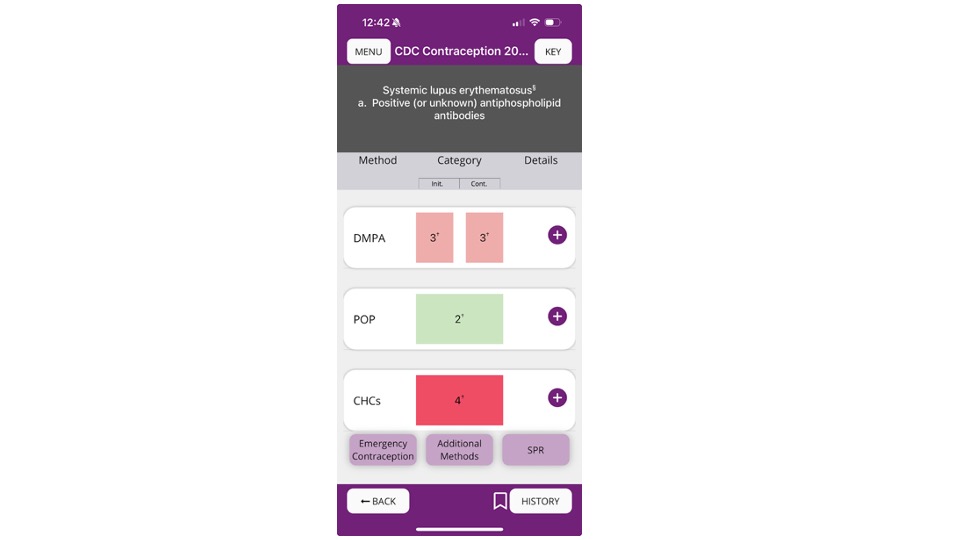
Individuals with SLE have increased risk for stroke, venous thromboembolism, and ischemic heart disease. This risk is further elevated for those who are aPL-positive—or whose status is unknown. As a result, for SLE with aPL-positive (or unknown) status:
- Combined hormonal contraception (CHC) is US Medical Eligibility Criteria (USMEC) Category 4 (unacceptable risk) due to the estrogen component.
- DMPA is USMEC Category 3 (theoretical or proven risks usually outweigh benefits) due to the high dose of progestin.
Severe thrombocytopenia is also a concern (Category 3) for methods that can cause increased bleeding—Copper IUD—or methods that can cause irregular bleeding and cannot be immediately reversed—DMPA (Category 3).
Assuming you can be reasonably certain she is not pregnant, could she safely initiate an implant today?
Yes. According to the 2024 US Medical Eligibility Criteria:
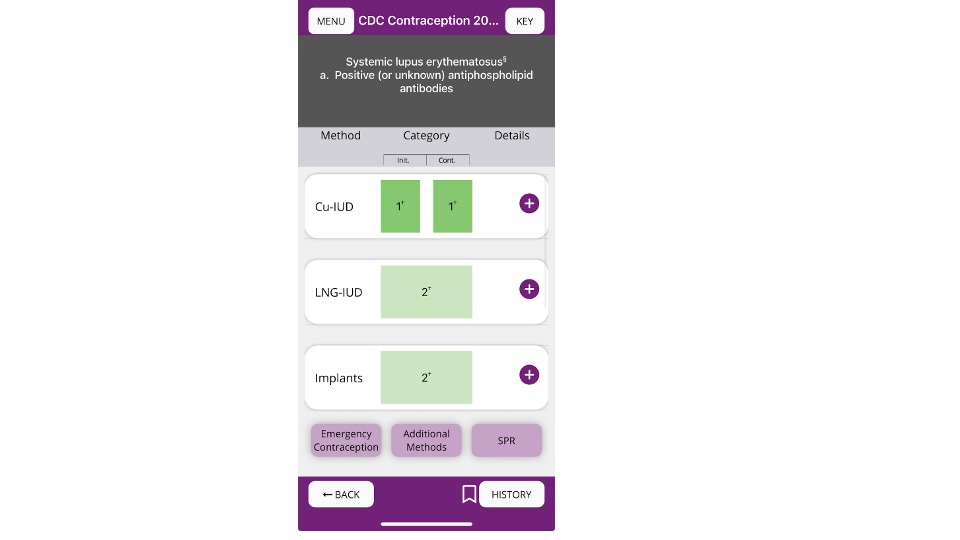
- The hormonal implant is USMEC Category 2 (advantages generally outweigh risks), for patients with positive or unknown aPL status, reflecting an improved safety profile from the prior 2016 guidelines.
- Other hormonal contraceptive methods that are also USMEC Category 2 for patients with positive or unknown aPL status include Levonorgestrel-IUDs and progestin-only pills. Copper IUDs are USMEC Category 2.
- For this group, Copper IUDs, in the absence of severe thrombyctopenia, are USMEC Category 1 (no restrictions).
What if she were aPL-negative?
All hormonal contraceptive methods are USMEC Category 2 for aPL-negative SLE. Copper IUDs are USMEC Category 1.
Why is it important to discuss reproductive desires with individuals with autoimmune disorders?
People with autoimmune diseases deserve access to quality SRH services. Unfortunately, research shows that they often receive inadequate SRH care due to systemic gaps and provider hesitancy. This is especially concerning given the use of teratogenic medications in many autoimmune treatment regimens. In many situations, patients with autoimmune diseases can safely initiate contraception in primary care and SRH clinics. However, it may be appropriate to consult with their rheumatologist or a complex family planning specialist for patients with more complicated disease states, medication regimens, or additional risk factors.
Understanding someone’s reproductive desires and staying up to date on evidence-based contraceptive care helps support patients in preventing pregnancy and being prepared for healthy pregnancies—both key elements of reproductive well-being. Providers should engage in proactive, informed conversations that center reproductive goals and autonomy.
Key Points
- Antiphospholipid antibody status and history of severe thrombocytopenia are both clinically relevant factors for contraception counseling for individuals with SLE.
- Many safe contraceptive options exist for patients with SLE and other autoimmune conditions.
- The hormonal implant, LNG-IUDs and progestin-only pills are USMEC Category 2 for individuals with SLE, regardless of antiphospholipid antibody status and history of severe thrombocytopenia.
- Providers play a pivotal role in supporting reproductive autonomy and well-being among patients with autoimmune conditions.